【ANN NEWS, CALIFORNIA】 A letter sent across the Atlantic changed the course of one family’s destiny.
Years later, the daughter of that family, Fiona Ma(马世云), became California’s 34th State Treasurer.
In the recently published “My Story” on her personal website, Fiona recounts for the first time in relatively comprehensive detail her parents’ immigration journey, her own upbringing, and how those family memories shaped her understanding of education, financial responsibility, small businesses and public service.
Her story did not begin on the political stage, but with a letter, a family ledger and an ordinary immigrant family’s faith in the future.
“Now or Never — Either We Get Married Now, or We Go Our Separate Ways”
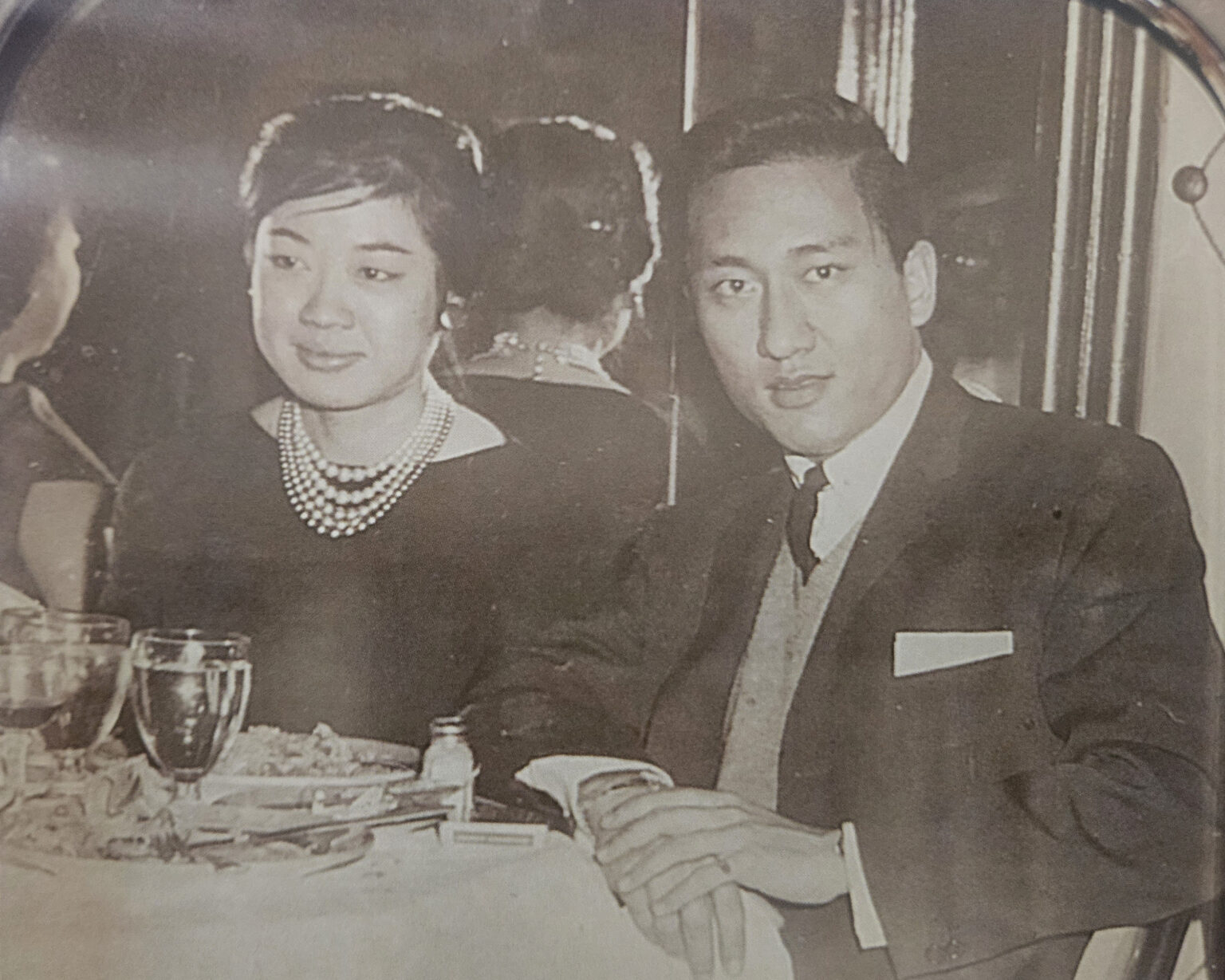
After graduating from the City College of New York, Fiona’s mother wrote a letter to her father, who was studying in Glasgow, Scotland, at the time.
The letter contained little preamble, only a line that amounted to an ultimatum:
“Now or never——Either we get married now, or we go our separate ways.”
After receiving the letter, her father flew from Glasgow to New York. The two married and then returned to Scotland together to continue their studies.
Later, when Fiona’s mother became pregnant with her, she returned to New York first. Her father followed her back to the United States shortly afterward, and the couple began building their family in New York.
According to Fiona, her parents had approximately $3,000 when they married, most of it from savings her father had accumulated over the years. That money represented the savings they had when they began their married life.
They did not come from wealth, nor did they have a path already laid out for them. What they had was their education, the ability to work hard, and the belief that the next generation could have a better life.
Education Can Change a Person — and an Entire Family
Fiona’s family lived through war, migration and separation.
Her father left China at age 13 and later studied in Canada, England and Scotland on full scholarships. Her mother left China as a child and earned both bachelor’s and master’s degrees from the City College of New York.
Their generation understood deeply that when a family could not predict what the future would bring, education was the most dependable asset they could give their children.
After settling in New York, her father joined General Foods, later overseeing corporate design and co-founding a design and manufacturing company. Her mother spent 20 years teaching art at a public high school on Long Island, New York.
One ran a small business, while the other taught and educated students.
Fiona said her parents’ experiences exposed her from an early age to two different but interconnected worlds: how teachers can change children’s lives through education, and how small-business owners struggle to keep their businesses running amid rent, payroll, bills, customers and market pressures.
Those experiences also taught her that behind every economic figure may be the livelihood and future of a family.
Her Father’s Ledger Became Her First Lesson in Finance
As soon as Fiona learned arithmetic, her father had her help balance the checkbook, organize household bills and prepare tax documents.
By age 16, her father began teaching her about investing and had her help manage her own stock account.
Her father wanted her to become an accountant.
Fiona later studied accounting at the Rochester Institute of Technology, gaining practical work experience while completing her studies through a paid cooperative education program. She went on to earn a master’s degree in taxation and a Master of Business Administration and became a Certified Public Accountant in California.
Fiona said her father taught her not only how to calculate numbers, but also how to be accountable for every dollar.
The experience taught her at an early age that every financial decision ultimately affects not a financial statement, but the real lives of ordinary families, employees and community residents.
Years later, the girl who once sat beside her father balancing the family ledger began taking on major responsibilities for managing California’s public finances.
Early Work Experience Helped Her Understand the Pressures Facing Small Businesses
Fiona began working at an early age.
At 10, she approached parents at a public swimming pool to ask whether they needed someone to help watch their children; at 16, she went door to door along Middle Neck Road on Long Island, New York, looking for a summer job.
A small shop called Yogurt Fantasy gave her an opportunity. She started as a regular employee and quickly became a manager.
Customers might see only a cup of yogurt, a smile and a brightly lit shop; business owners, however, face rent, employee wages, operating costs, government regulations and the uncertainty of whether enough customers will walk through the door the next day.
Fiona said the experience gave her firsthand insight into the difficulties of running a small business.
As a result, when business owners tell her that government procedures are too complicated, operating costs continue to rise, or they do not know where to turn for help when problems arise, she understands those concerns.
Because she, too, once stood behind the counter of a small shop.
The First Step in Public Service Is Not Speaking, but Listening
After college, Fiona joined a major accounting firm, working in real estate taxation. She quickly noticed that there were very few women in senior management.
At 28, she left the firm and started her own accounting practice. She later served as president of a small business association and was selected to participate in the White House Conference on Small Business in 1995.
When she first entered government service, she worked as a community representative, helping residents address issues involving taxes, unemployment, homelessness, foster children and single-parent families.
There, she met many people who had done everything they could but still could not escape difficult circumstances; she also encountered families who, not knowing which government agency to turn to, were forced to go back and forth between different agencies.
Those experiences led her to develop a principle she has followed ever since:
Listen first, understand the problem, then find a solution.
Fiona said the first lesson she learned in government was not politics, but service.

The Issues That Matter Most Do Not Always Make the Headlines
Fiona subsequently was elected to the San Francisco Board of Supervisors, the California State Assembly, the California State Board of Equalization and as California State Treasurer.
During her tenure on the San Francisco Board of Supervisors, she worked on efforts to improve road safety, repair streets, support public safety in neighborhoods, assist small businesses, clean up beaches and renovate public libraries.
These issues may not always make headlines, but Fiona believes that if they involve the streets residents travel every day, the libraries children use, community safety or a family’s livelihood, they matter greatly.
During her time in the California State Assembly, she worked across party lines to advance multiple bills that became law.
While serving as chair of the California State Board of Equalization, she pushed for external audits and institutional reforms. When she concluded that the agency could no longer effectively serve taxpayers, she participated in reducing some of the powers of the very institution on which she served.
Fiona said public service is not about how much power an official holds, but about what problems that power can solve for the public.
From Her Father’s Ledger to California’s Public Finances
In 2018, Fiona Ma was elected California State Treasurer and was reelected in 2022.
She is the first woman of color in California history elected to the position and the first woman State Treasurer to hold a Certified Public Accountant license.
As one of California’s principal financial officials, she is involved in managing government payments, investments, bond issuance and financing for public projects, with responsibilities spanning housing, schools, hospitals, roads, public facilities and retirement security.
Fiona said that even today, while dealing with a vast public finance system, she still remembers her father teaching her how to balance the family ledger.
In her view, behind every policy and every number stands a real person:
A parent struggling to afford housing, a student worried about college tuition, a small-business owner trying to make payroll on time, an older adult hoping to retire with dignity, and an ordinary family trying to make ends meet as the cost of living continues to rise.
One Family’s Journey Reflects the Experiences of Countless Immigrant Families
The story of Fiona’s parents also reflects the experiences shared by many Chinese immigrant families.
The first generation leaves a familiar homeland and starts over in an unfamiliar environment; they work hard, save carefully and give their children the best educational opportunities they can, hoping the next generation will have more choices.
They may not always be skilled at expressing their feelings, but they often spend their lives teaching their children through their actions: study hard, work hard, appreciate what you have and do not forget to help others.
From a letter sent across the Atlantic to a marriage begun with approximately $3,000 in savings; from a small shop on Long Island, New York, to the California State Treasurer’s Office; from her father’s household ledger to California’s public finances——Fiona said the greatest wealth her parents gave her was not money, but a belief in education, hard work, responsibility and serving others.
She hopes to pass along the opportunities she once received so that more young people will not miss the first door that could change their lives because of family income, ethnic background or a lack of connections.
A person’s success is not measured only by how far she has gone.
What matters more is whether, after reaching a higher position, she still remembers where she started and is willing to open more doors of opportunity for those who come after her.
【END】