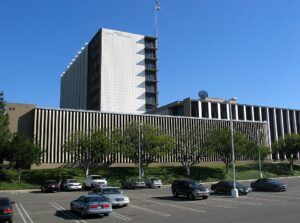
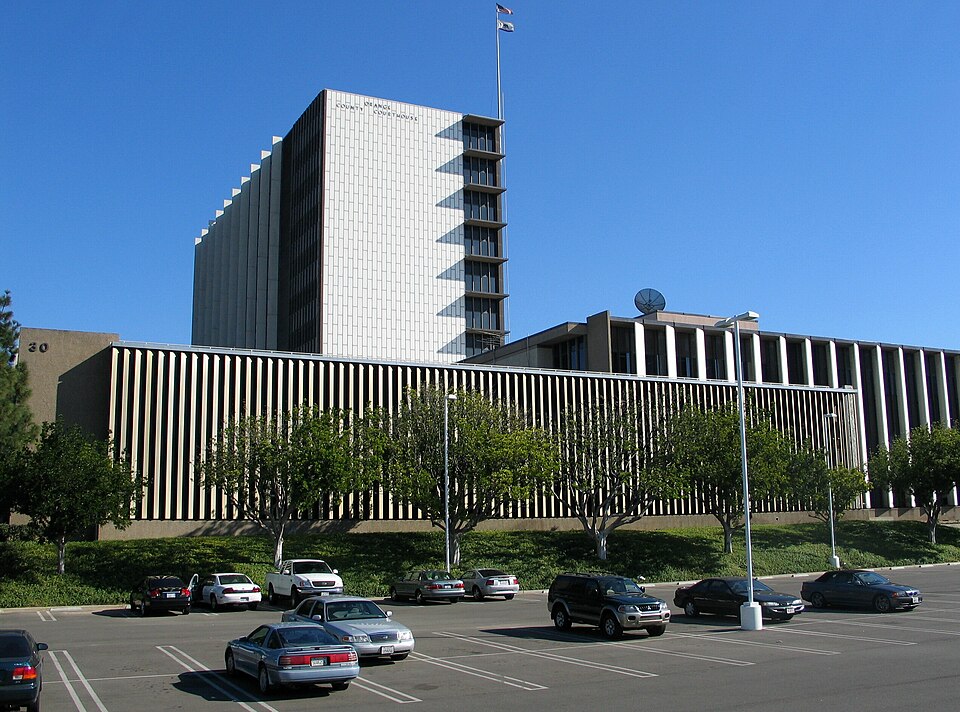
Santa Ana, CA – October 16, 2026 In a historic victory for civil rights advocates and communities across California, Orange County Superior Court Judge Hesseltine yesterday afternoon ordered the dissolution of all 13 of Orange County’s remaining gang injunctions, bringing an end to the last gang injunction program known to have been enforced in California.
Today’s decision marks the end of an era of gang suppression that began in Los Angeles in 1987 and eventually spread to more than 150 neighborhoods across the state, affecting tens of thousands of Californians. A statewide investigation by the Peace and Justice Law Center (PJLC) and Decriminalizing Neighborhoods Network (DNN) found no evidence that gang injunctions were still being enforced anywhere in California besides Orange County.
Gang injunctions allowed prosecutors to obtain a permanent civil court order against a neighborhood, restricting otherwise lawful activities of a selected group of residents. Police could then arrest people accused of violating those restrictions.
“This is the end of one of the most racist experiments in modern policing,” said Sean Garcia-Leys, Executive Director of PJLC. “For almost 40 years, prosecutors used civil court orders to turn ordinary activities into crimes for people disfavored by police, nearly all of whom were people of color living in neighborhoods targeted for gentrification or bordering mostly white neighborhoods. People were arrested for taking out the trash after curfew, talking to family members in public, or taking their kids to the park while being told the restrictions would be lifted if they moved out of the neighborhood. Today, that chapter of California history has finally come to an end.”
Today’s ruling follows a March 2025 demand by PJLC, representing Chicanxs Unidxs, Clergy and Laity United for Economic Justice (CLUE), and directly impacted community members. The demand warned District Attorney Todd Spitzer that continued enforcement violated California’s Racial Justice Act and recent changes the Legislature had made to the definition of a gang. In June 2025, Spitzer agreed to seek dissolution of the injunctions.
After over a year of hearings ensuring affected individuals received proper notice, Judge Hesseltine ordered all 13 injunctions “DISSOLVED WITHOUT PREJUDICE AND IN THEIR ENTIRETY” as to everyone named in or potentially subject to them. The court emphasized the importance of notifying people that the restrictions no longer applied.
“Being on that injunction was humiliating. It made me feel voiceless and less than human. I was regularly harassed by police,” said Montes, whose prosecution for allegedly violating an injunction was dismissed. “When the chance came to fight back and end these injunctions for everyone, I took it, for my daughter and for others too scared or silenced.”
A Statewide Victory Built Over Decades
The end of Orange County’s injunctions is the final chapter of a statewide movement. For decades, directly impacted people, families, community organizers, gang intervention workers, and civil rights lawyers challenged gang injunctions through protests, litigation, research, and legislative advocacy. Community campaigns in Oakland, San Francisco, Santa Barbara, Oxnard, Los Angeles, San Diego, and Orange County gradually undermined the legal and political foundations of injunction enforcement.
Landmark court decisions, including Vasquez v. Rackauckas (2013), People v. Sanchez (2017), and Youth Justice Coalition v. City of Los Angeles (2017), established greater constitutional protections for individuals accused of gang membership. Subsequent legislation, including California’s Racial Justice Act and AB 333, created additional obstacles to enforcement.
To document the statewide victory, PJLC sent Public Records Act requests to district attorneys in 56 California counties, receiving 55 responses. Combined with court records, public announcements, reporting, and interviews, the investigation found no evidence of gang injunction enforcement anywhere in California in the last five years. Although some old injunctions may remain on the books, prosecutors have abandoned their enforcement.
“Prosecutors announced these injunctions with press conferences and promises of safer neighborhoods, but when they abandoned them, most did so quietly,” Garcia-Leys said. “This victory belongs to the families, organizers, and communities who fought for decades to defend their rights. They deserve to know that they won.”
Although gang injunction enforcement has ended, other forms of gang suppression, including police gang databases, surveillance, and sentence enhancements, remain. PJLC and its allies continue advocating for investments in violence prevention, education, employment, and community-based approaches to public safety.
Copies of the court order and PJLC’s statewide research are available upon request.